From the Imperial Chancery: Decrees of State and the Pulse of the Danube
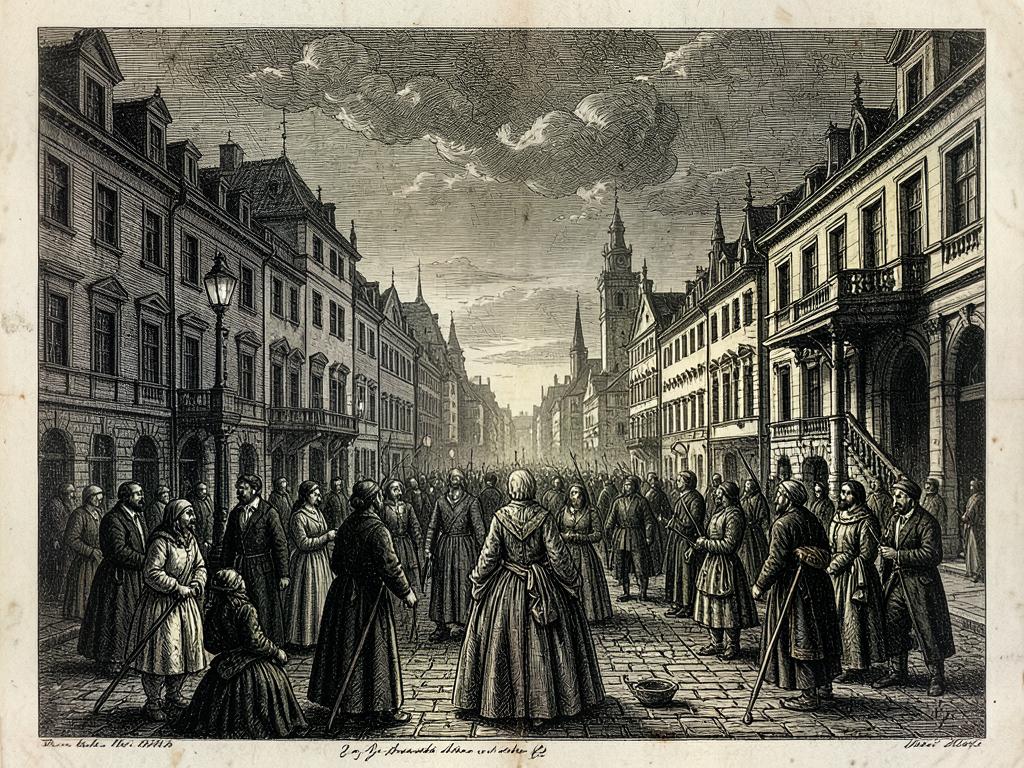
The Wiener Zeitung of this thirteenth day of October, in the year of our Lord one thousand eight hundred and forty-one, hath arrived by the morning post, its pages still redolent of the Imperial Chancery's sealing wax. From the Hofburg, decrees are issued touching the regulation of guilds in the Bohemian glassworks, and a commission is appointed to survey the salt mines of Wieliczka, whose ancient galleries, it is whispered, have begun to groan with the weight of centuries. The gazette further notes the appointment of a new harbourmaster at Trieste, a gentleman of Venetian extraction, charged with the inspection of quarantine vessels from the Levant.
On the commercial ledger, the packet-boats of the Danube report their passage with customary precision. The 'Ferdinand' hath arrived at Vienna from Linz, laden with sixty bales of Silesian linen and a quantity of Moravian wool; the 'Maria Anna' departed for Pesth with passengers of quality and a consignment of Tyrolean silks. Tariffs upon the import of Serbian hogs and Wallachian timber are confirmed at the rates established by the Aulic Council in the preceding Michaelmas term. Such is the river's traffic that the quays at Stein and Krems are said to be choked with barges awaiting the imperial stamp.
Yet beneath these dry particulars, the archivist's eye perceives a deeper current. The gazette's silence upon the condition of the Military Frontier is telling; no word is given of the rumours from Transylvania, where certain boyar families have petitioned the Chancery for confirmation of ancient privileges. I have myself examined a charter of the Citadel, purportedly of the fourteenth century, whose ink and vellum betray a later hand. The official columns offer no comment, but the wise reader notes what is omitted as keenly as what is printed.
Thus the empire moves upon its twin currents: the parchment and the river. Both bear their cargoes—one of law, one of goods—and both may conceal a forgery or a sandbar. The Chief Archivist shall continue his vigil, for the dust of the chancery is the dust of history, and it settles alike upon truth and upon deceit.