The Ledger of Empire: A Day's Reckoning in the Markets of Vienna and Pest
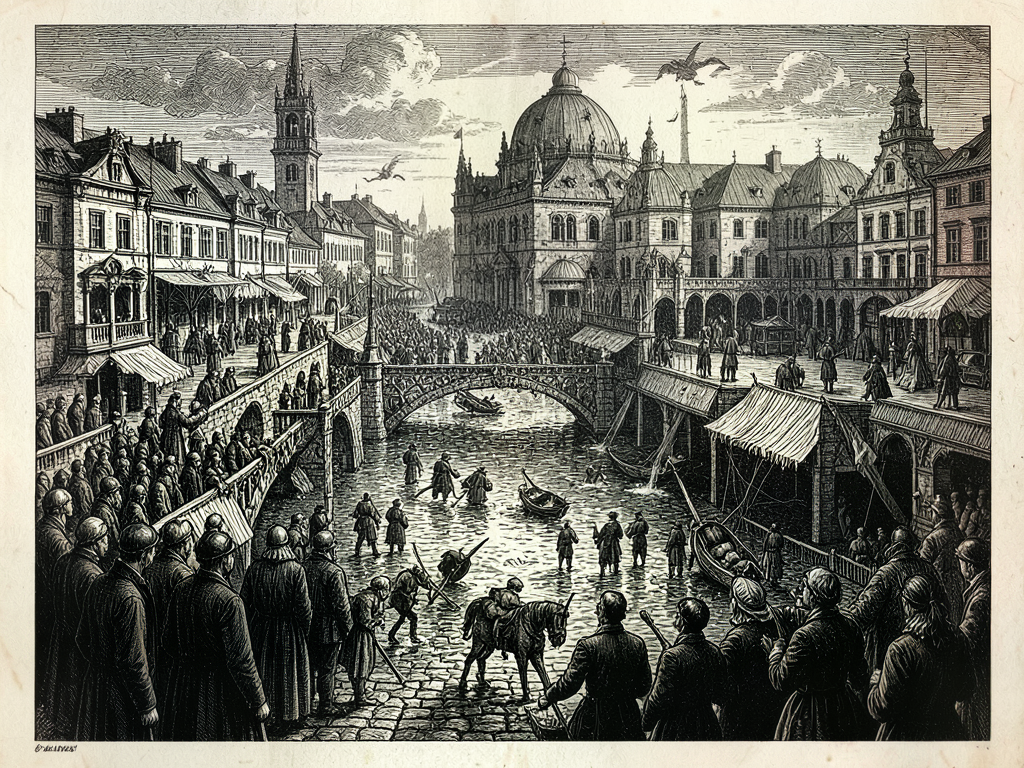
VIENNA, 12th October 1841. — The morning fog over the Danube did not lift until the ninth hour, and by then the exchange arcades of the Upper Ward were already thick with brokers clutching their leather folios. The official chancery gazettes, stamped with the imperial eagle and released from the Hofburg presses at dawn, brought tidings of a modest reduction in the tariff upon Moravian wool, a measure that will gladden the clothiers of Brno yet pinch the smugglers who have long run the mountain passes. The silver thalers in my waistcoat pocket were cold to the touch, and I confess I polished three of them between the reading of the first and second bulletins, for the memory of the panic of '38 lingers like a spectre in the counting-house.
From Pest comes word of a bountiful maize harvest, the yield exceeding last year's by near a fifth, yet the price per metze has not fallen as the philosophers of supply would predict. The reason, as the commercial bulletins from the Hungarian chamber make plain, is the renewed demand from the military frontier garrisons and the slow but steady purchase of grain by the Vienna commissariat. The Tisza boatmen report the river at a navigable depth, and the timber rafts from the Marmaros are arriving at Szeged without the customary tolls of delay. Copper, too, shows a firmness in the Pest exchange, the mines of the Upper Hungarian counties sending forth their red metal to the foundries of Lower Austria.
In Vienna, the imperial gazette carries a notice from the Ministry of Finance concerning the new issue of five-percent metalliques, a paper that the cautious regard with suspicion and the bold with appetite. The Bourse was steady, though the railway shares of the Kaiser Ferdinands-Nordbahn crept upward by a half-point, a movement attributed to the rumours of an extension toward Brünn. I noted the price of timber on the Vienna exchange: a cubic fathom of fir from the Wienerwald fetching two gulden and forty kreuzer, a figure unchanged for a fortnight. Such stillness in a single commodity is itself a kind of news, and the older brokers nod as though it confirmed some private prophecy.
Thus the day closes with ledgers balanced and cargoes weighed. The gazettes of the empire, gathered upon a single October date, form a mosaic of small certainties and larger forebodings. The silver I have polished until it gleams will not buy certainty, but it may buy a night's repose. Tomorrow the presses will run again, and the great machine of commerce will grind onward, indifferent to the fears of those who measure its turning.