The Imperial Ledger: A Chronicle of Commerce and Currency from Vienna to the Carpathian Frontier
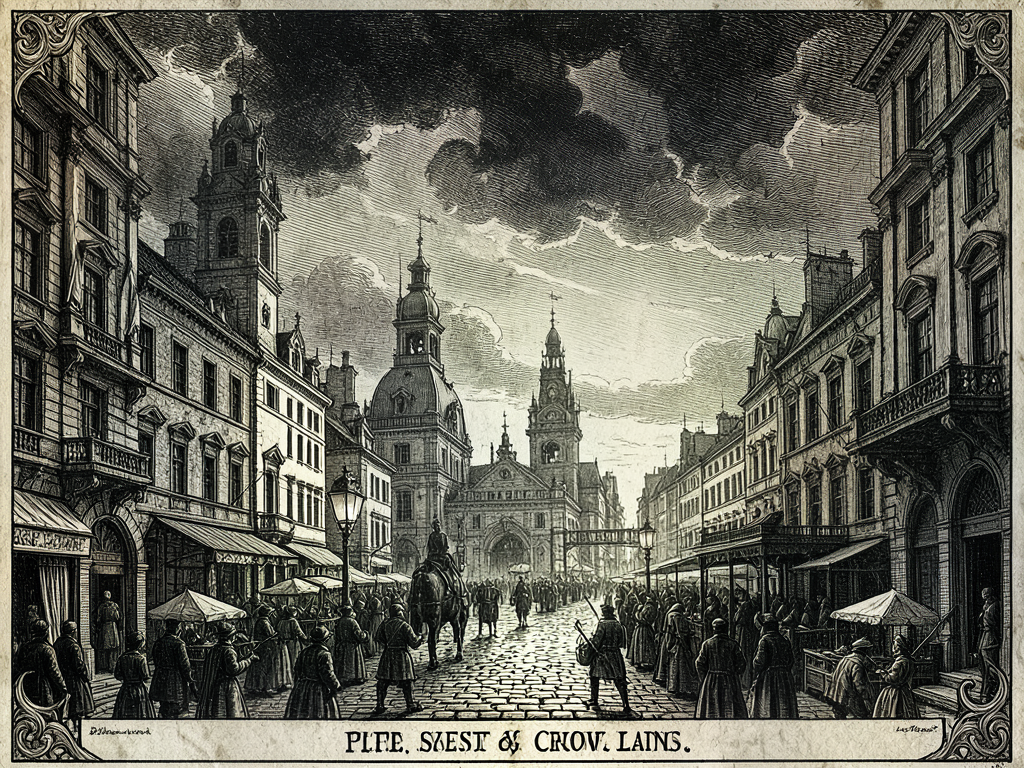
The gazettes of this day, collected from the imperial capital and the far-flung crownlands, present a tableau of commerce as restless as the autumn winds that sweep the Carpathian passes. In Vienna, the Bourse exhibited a peculiar agitation, the price of silver thalers rising by a full two kreuzers against the paper florin, a sure sign that the prudent burgher yet distrusts the promises of the treasury. The official chancery edicts, published in the Wiener Zeitung, announce a forthcoming revision of the tolls upon the Danube, a matter of no small consequence to the grain barges that ply that muddy artery. Meanwhile, the Pesther Handlungs-Zeitung reports a glut of wool upon the Hungarian plain, with prices sagging under the weight of an abundant clip, bringing gloom to the great sheep-folds of the Banat.
From our own Transylvania, the reports are of a steadier, if no less sombre, character. The timber merchants of Kronstadt have concluded their autumn contracts with the Ottoman ports, securing a price for seasoned oak that, while not generous, suffices to keep the saw-pits busy through the winter. The copper mines of the Apuseni Mountains, however, labour under the twin burdens of flooded shafts and the avarice of the Saxon lessees, and the metal arrives at the smelters in but a thin trickle. In the market squares of Cluj and Sibiu, the price of maize has firmed by a few kreuzers, as the peasantry, mindful of the early frosts, hasten to lay by their winter stores.
The commercial bulletins from the Austrian Crownlands offer little cheer. A dispatch from Linz notes a decline in the salt trade, attributed to the mild weather and the consequent reluctance of the peasant to purchase his winter ration. From Graz, we learn that the iron founders of Styria have been compelled to reduce their output, the demand for agricultural implements having fallen off sharply after the poor harvest in the south. Yet amid these signs of retrenchment, the export of Bohemian glass to the Levant continues brisk, and the porcelain works of Vienna report a steady call for their finer wares from the princely houses of the East.
Thus, the ledger of empire balances precariously. The speculator in Vienna may tremble at the fluctuation of the thaler, but the miller on the Mureș and the miner in the Carpathians proceed with the grim patience of those who know that the earth and the season are their true masters. We shall continue to chronicle these movements, ever vigilant for the subtle signs of prosperity or peril that lie hidden in the columns of figures.