THE IMPERIAL EXCHANGE: A Day of Gazettes and Grain in the Crownlands
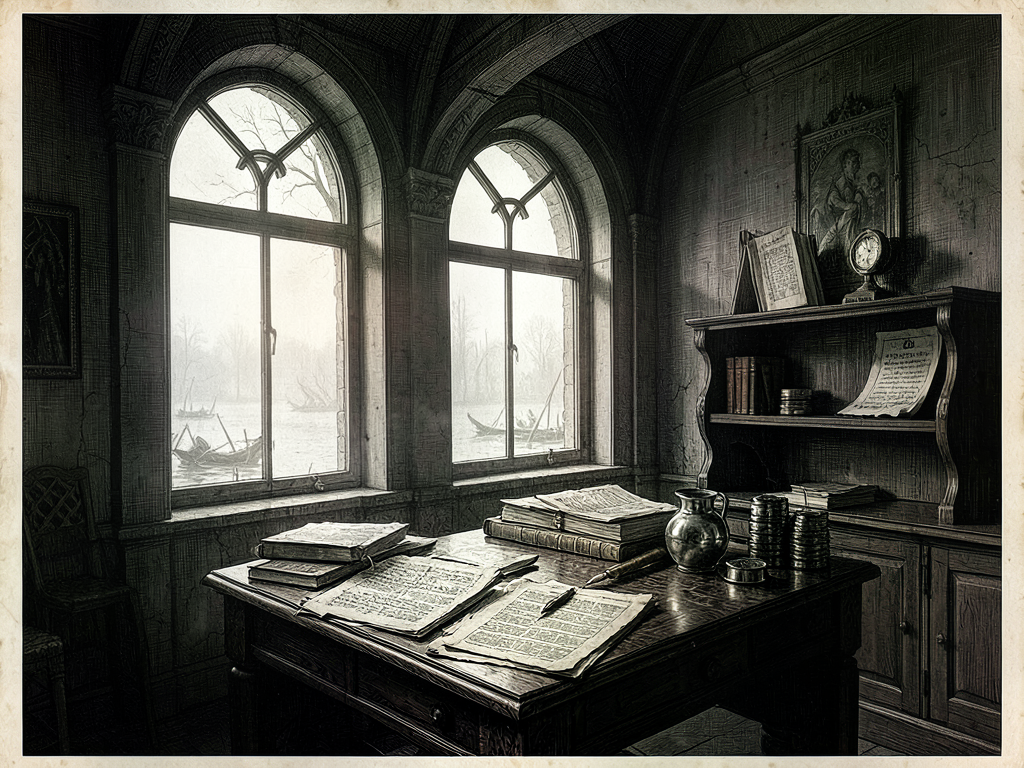
The gazettes of the twenty-third day of November, in the year of Our Lord eighteen hundred and forty-one, have reached our exchange arcade in Upper Ward, bearing the inked impress of the imperial chancery and the provincial trade bulletins. From Vienna, the official edicts speak of a revised schedule for the silver thaler, its weight and fineness decreed with that bureaucratic precision which governs the very air of the Hofburg. The commercial sheets of Pest report a brisk demand for copper, the mines of the Banat yielding generously, though the price per quintal has risen by a fraction, causing no small stir among the brokers who frequent the coffee-houses of that city.
The timber trade, ever the backbone of our Carpathian commerce, shows a steady hand. The rafts upon the Danube, those floating forests of pine and oak, have descended in goodly number, and the quays at Pest are reported thronged with merchants from the Crownlands. Yet, a note of caution sounds from the grain exchanges: the harvest in the lowlands has been unequal, and the official bulletins from the chancery, while couched in the dry language of statistics, betray a subtle anxiety. The price of wheat has edged upward, and the millers of Transylvania, ever watchful, have begun to hoard their stocks against the winter's uncertainty.
In the exchange arcade, the talk is of little else but the silver thalers, which I confess I have polished with a compulsive diligence, their cold lustre a soothing balm against the dread that gnaws at me when markets tremble. The Vienna bulletins also note a slight depreciation in paper currency, a matter of grave concern to those who hold imperial bonds. The commercial gazettes of Pressburg and Ofen echo these murmurs, and the consensus among the brokers is that the crownlands stand at a precipice, though none dare speak it aloud.
Thus, the day's chronicle is one of cautious trade and official pronouncements, a tapestry of figures and edicts that we, the auditors of commerce, must decipher with stoic resolve. The gazettes, bound in their sepia leaves, will be filed in the archive, a testament to the ceaseless rhythm of exchange that binds Vienna to Pest and Pest to our own Transylvania.