Imperial Decrees and Danubian Currents: The Vienna Gazettes of November
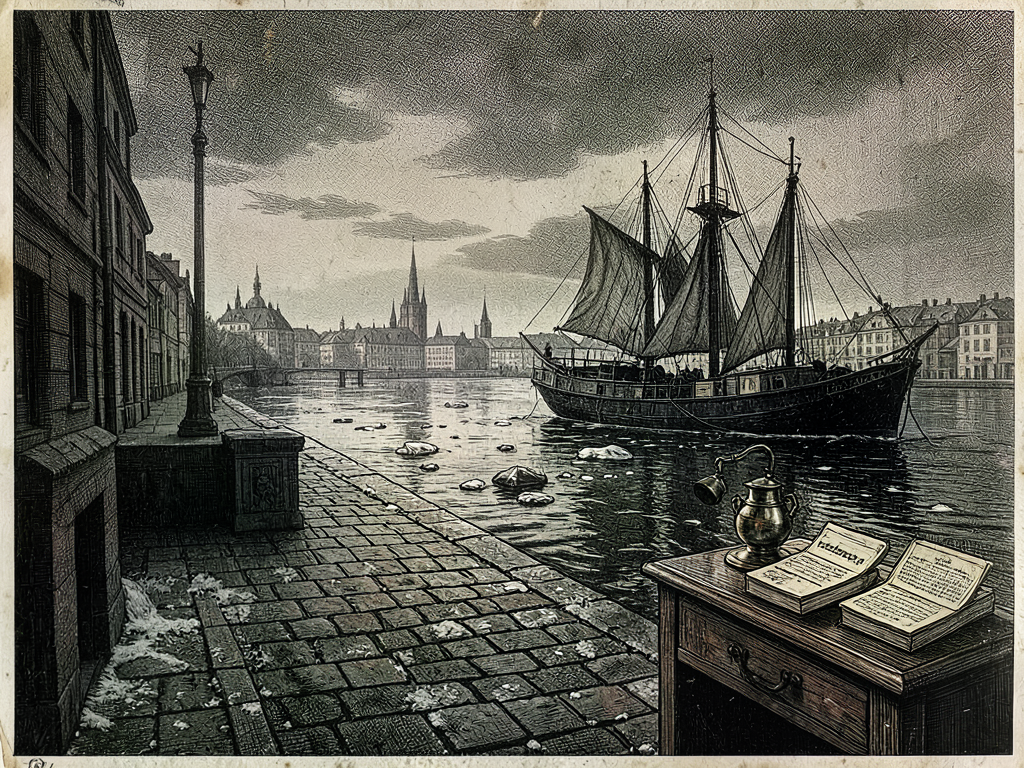
The Wiener Zeitung of the twelfth instant, received at our scriptorium by the evening post, affords a sobering survey of the Empire's commercial machinery. Its columns, dense with chancery decrees and tariff schedules, betray a government ever attentive to the pulse of the Danube. Packet movements are recorded with the precision of a confessor's ledger: the departure of the Salzburg packet from Linz, the arrival of the cargo-laden vessels at Vienna's quays, each entry a testament to the river's role as the Empire's chief artery. The commercial tariffs, revised for the winter season, are set forth in tables that would weary the eye of a lesser antiquarian, yet they are the very sinews of trade, binding the Crownlands in a web of duties and exemptions.
Of particular note is the imperial rescript concerning the navigation of the Danube, wherein the chancery reaffirms its ancient prerogative over the river's tolls. The document, couched in the florid Latin of the Hofburg, invokes the memory of Maria Theresa and the pragmatic sanctions of old, as if to cloak a commercial regulation in the mantle of dynastic continuity. One observes, not without a certain scholarly amusement, how the present decree echoes the phrasing of a fourteenth-century charter—though the latter, as I have elsewhere demonstrated, is a forgery of the most cunning manufacture. The gazette, of course, makes no mention of such archival curiosities; it is concerned only with the levy upon salt, timber, and grain.
The packet movements further reveal the seasonal shift: fewer vessels from the east, more from the Bavarian frontier, as the river's current slackens and the ice begins its slow encroachment. The commercial gazette notes a slight diminution in the grain trade, attributed to the early frosts in the Banat, while the wine tariffs from the Tokaj region remain unchanged, a small mercy for the cellars of the nobility. Such details, dry as they appear, are the very stuff of history; they record the quiet rhythms of a realm that believes itself eternal, even as its charters crumble and its rivers freeze.