The Imperial Chancery Speaks: Decrees, Packets, and Tariffs from the Danube
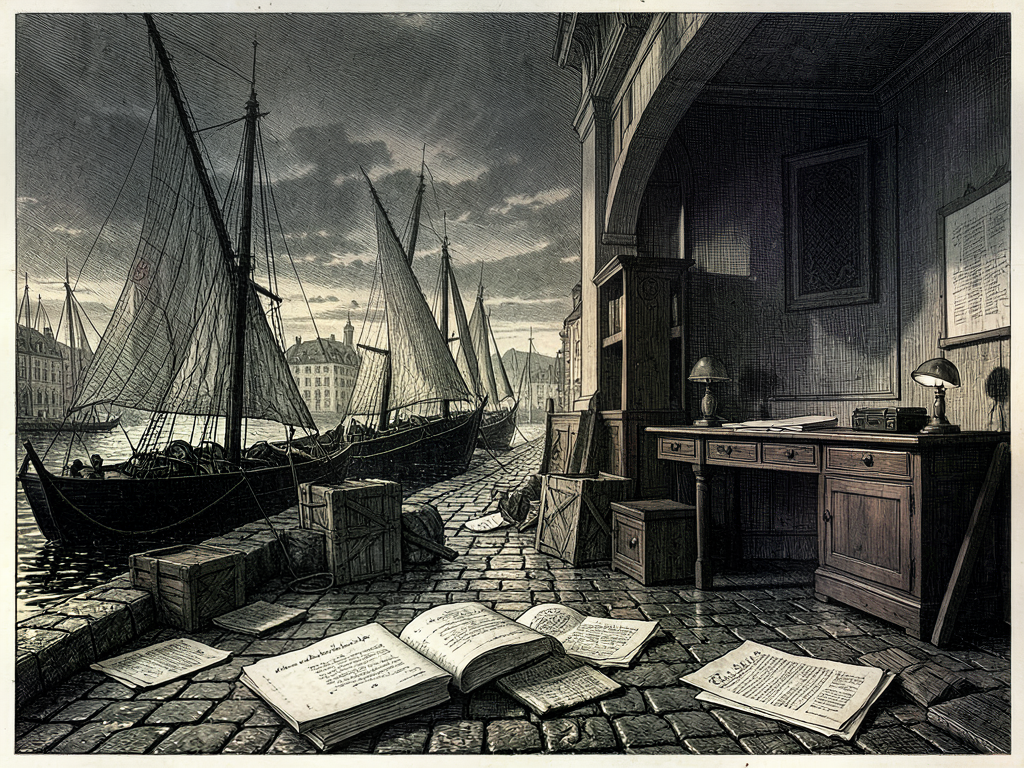
VIENNA, 11th November 1841. — The official gazettes of the Imperial Court and the Danube Commercial Society have reached our scriptorium, bearing tidings from the heart of the Habsburg dominions. The Wiener Zeitung, ever the faithful herald of imperial will, records the chancery's decrees with that meticulous precision which characterizes the Austrian bureaucracy. Of particular note is the promulgation of new tariffs upon the river packet traffic, a measure calculated to swell the imperial coffers whilst regulating the commerce that flows like lifeblood through the Danubian artery. The packets themselves, those floating caravans of merchandise and correspondence, are reported to have made their scheduled passages between Vienna and Pest, their manifests swollen with grain, salt, and the myriad goods of the Crownlands.
Our readers in the Carpathian borderlands will find especial interest in the chancery's confirmation of the ancient Boyar treaties, now ratified anew under the imperial seal. These documents, which we have long cherished in our archives, serve as a reminder of the intricate web of obligations and privileges that bind the noble houses to the throne. The gazette further notes the arrival of several packets bearing dispatches from the Banat and Transylvania, their cargoes including not only commercial wares but also the official correspondence of the provincial governors. Such movements, though mundane to the Viennese, are the very stuff of our frontier chronicles, for they carry the weight of empire across the waters.
Yet, amidst these reports of tariffs and packets, a shadow falls upon our antiquarian soul. The chancery's decrees, so confidently promulgated, rest upon foundations that we have lately had cause to question. The founding charter of our own Citadel, that venerable parchment which purportedly dates from the fourteenth century, has revealed itself to be a forgery of no small cunning. This discovery, which we shall detail in a future chronicle, casts a pall over the official histories and reminds us that even the most august documents may conceal the hand of the forger. Let the gazettes trumpet their decrees; we archivists know that the past is a fragile thing, ever threatened by the worm and the pen.
Thus, from the Cathedral Crypt Scriptorium, we bid our readers attend to the movements of the packets and the words of the chancery, but also to the silent testimony of crumbling parchments. For in the end, it is not the tariffs that endure, but the truth—however belatedly it may be unearthed.