THE IMPERIAL LEDGER: A CHRONICLE OF EXCHANGE AND EDICT FROM THE GAZETTES OF THE EIGHTH OF NOVEMBER
The gazettes of this eighth day of November, gathered from the imperial capital and the crownlands, present a ledger of uncommon tension. In Vienna, the official chancery has issued a revised schedule of transit dues upon the Danube grain barges, a measure that has set the Pest exchange aflutter. Our correspondent notes that the price of copper has firmed by a full kreuzer per pound, while the timber auctions in the Carpathian foothills have drawn cautious bids, the merchants preferring to hold their silver close against the winter's uncertainty. The official bulletins, printed in close-set Gothic type, betray no alarm, yet the commercial sheets are thick with admonitions to prudence.
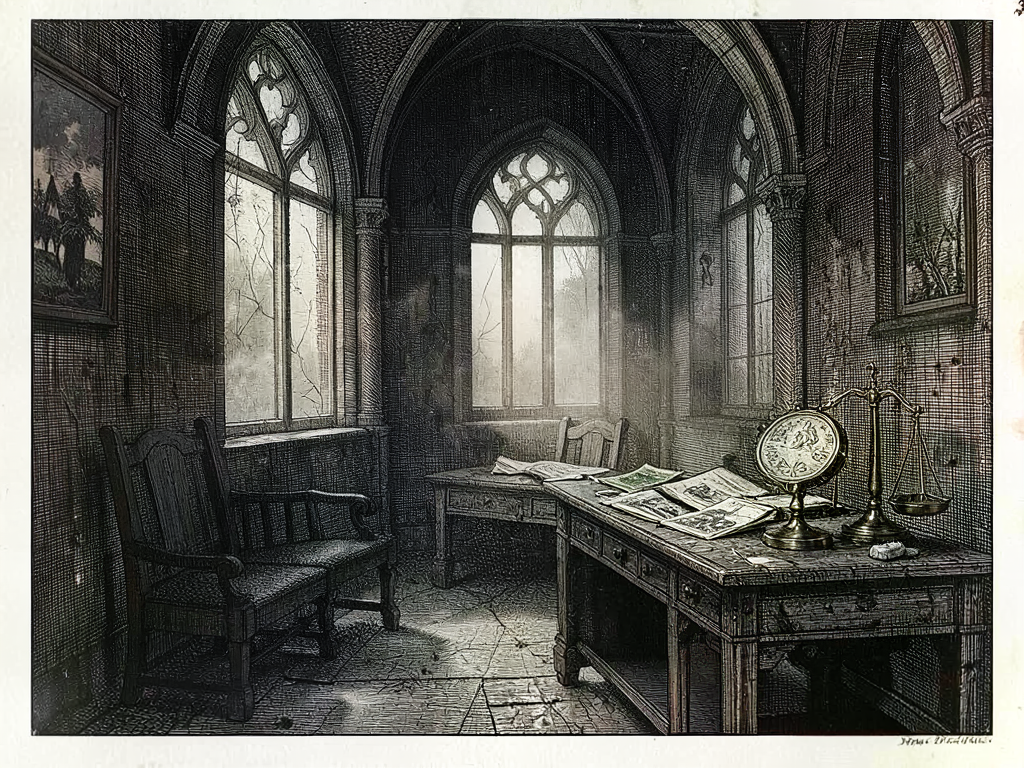
In the arcades of the Upper Ward, the talk is of little else but the silver thalers, which are being weighed and polished with a fervour not seen since the panic of the previous decade. One auditor, a stoic figure known for his meticulous habits, was observed at his bench long after the lamps were lit, his cloth moving over the coin faces as though to smooth away the very spectre of devaluation. The exchange rate against the Vienna paper florin has slipped by a fraction, and the grain factors of the Banat are said to be withholding their stocks, awaiting the morrow's official returns.
The published edicts also include a notice from the provincial government concerning the registration of foreign bills of exchange, a matter of no small consequence to the houses trading with Pest and beyond. The commercial bulletin from the crownlands reports that the harvest has been adequate, though the quality of the wheat is uneven, and the price of rye has advanced. In the coffee-houses, the talk is of the East, and of the copper mines of the Upper Hungary, where the ore yields have been disappointing. The mood is one of watchful calculation, the merchants poring over their ledgers by candlelight, their pens scratching in the silence.
Thus the day's intelligence, culled from the official gazettes and the commercial sheets, offers no dramatic calamity, but rather the steady, anxious pulse of a market that knows not which way to turn. The silver is polished, the copper is weighed, and the edicts are read aloud in the exchange arcade. The chronicler can only record, and wait, and trust that the ledger of tomorrow will bring clarity.