THE IMPERIAL LEDGER: A Day of Gazettes from Vienna to the Crownlands
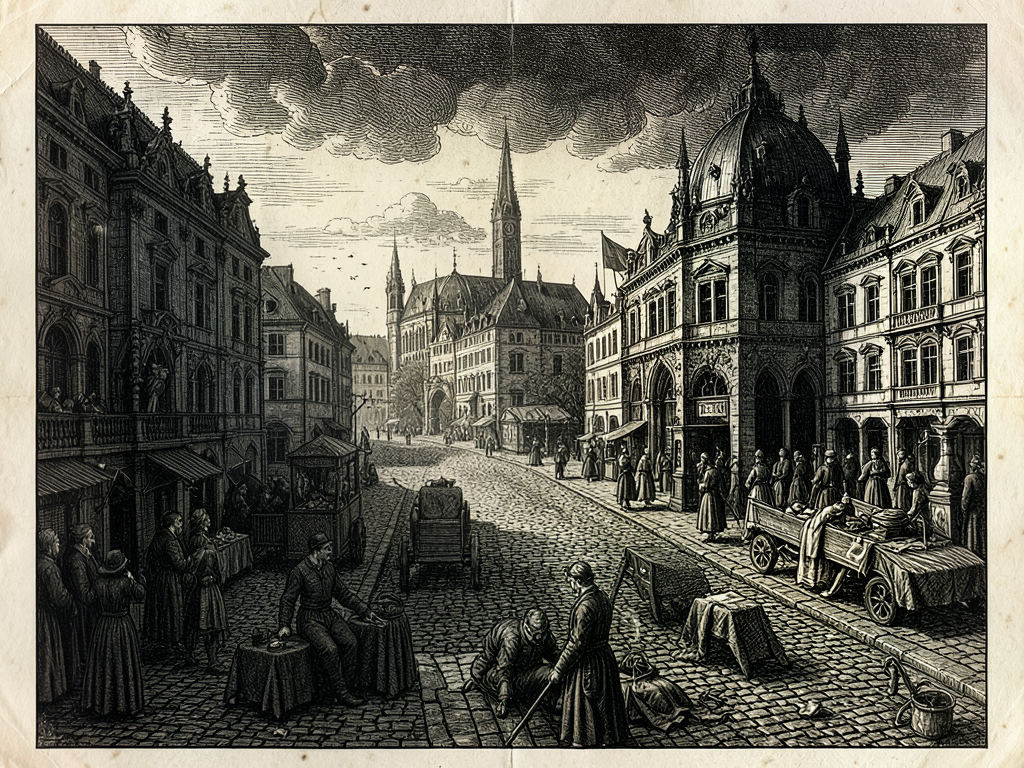
On this day, the twenty-first of October in the Year of Our Lord 1841, the gazettes of the Austrian Empire have been collected and examined in the reading rooms of the capital, revealing a tapestry of official proclamations and commercial intelligence that governs the pulse of our far-flung dominions. The official chancery edicts from Vienna, printed in the Imperial capital, announce adjustments to the tariff schedules for the importation of raw copper from the Banat, a measure designed to stimulate the mines of that region while ensuring a steady supply for the foundries of Lower Austria. These edicts, stamped with the imperial seal, carry the weight of law and the promise of order in the ever-shifting currents of trade.
From Pest, the commercial bulletins report a buoyant market in grain, with the wheat harvest of the Hungarian plain surpassing last year's yield by a notable margin. The price of a metze of wheat has fallen by two kreutzers, a boon to the bakers of Buda and a source of quiet satisfaction to the estate owners who watch the Danube barges laden with sacks. Yet, the same bulletins note a slight rise in the cost of timber, as the forests of Transylvania are being felled at a pace that gives pause to the more prudent among the forestry commissioners.
In the Crownlands, the provincial gazettes from Siebenbürgen and the Banat carry notices of a new silver assay standard for the thalers minted at Nagybánya, a matter of no small consequence to the exchange arcades of our own Upper Ward. The assayer's report speaks of a purity of nine hundred and two parts per thousand, a figure that has set the money-changers to polishing their coins with renewed vigour, as if to reassure themselves that the metal within remains true. The price of silver on the Vienna bourse has held steady at fifty-two kreutzers per loth, a stability that belies the tremors in the copper market.
Taken together, these gazettes of a single day afford a view of an empire whose commercial life is as varied as its provinces, bound by the twin threads of imperial decree and market necessity. The careful reader will note that while the harvest is plentiful and the mines yield their ore, the true currency of the realm is confidence, and it is upon this that the edifice of our prosperity rests.