The Imperial Ledger and the Ghost of the Danube: Reflections from Vienna
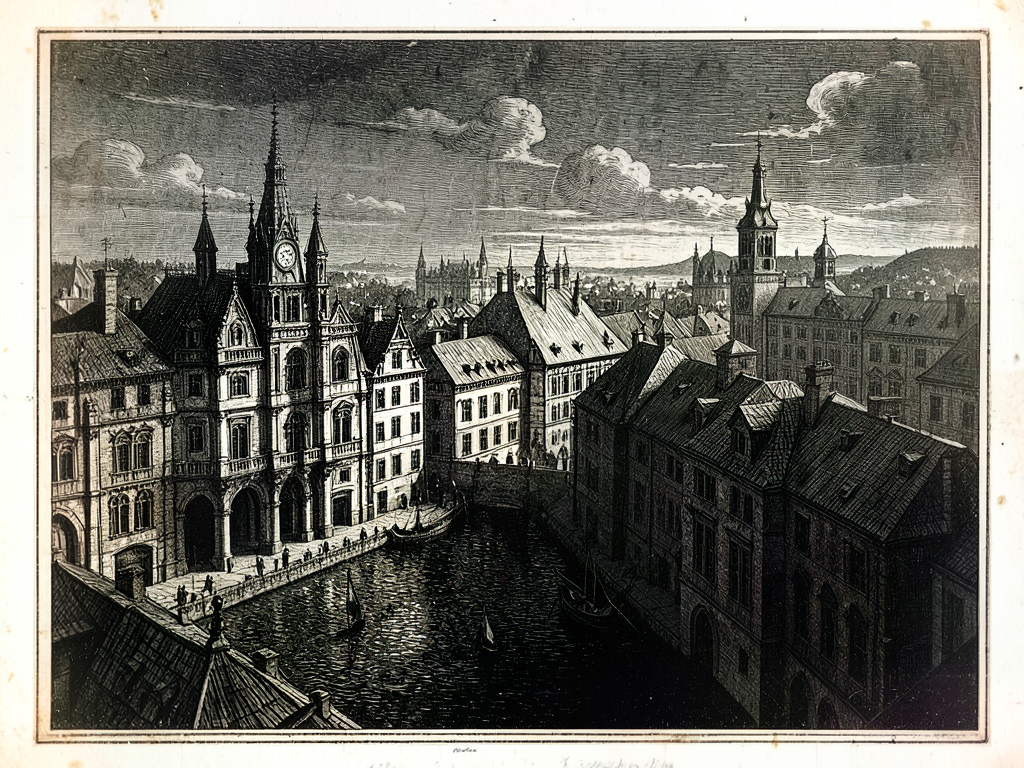
Vienna, 8th September, 1841. Under the gilded arches of the Hofburg, the Imperial Chancery has unburdened itself of a fresh sheaf of decrees, each one a spoke in the great wheel of Habsburg governance. The Wiener Zeitung, that sober chronicler of court and custom, this very morning lays before the public a meticulous account of tariff adjustments affecting the transit of grain, timber, and salt upon the restless waters of the Danube. One cannot help but marvel at the symmetry of empire—how a quill stroke in Vienna sends ripples through the warehouses of Pest and the wharves of Galatz, binding distant provinces in a web of parchment and duty.
Yet it is the river packet movements that stir this correspondent's antiquarian heart. The steamships Maria Anna and Ferdinand I, those iron-lunged messengers of progress, are recorded as having departed from the Schanzel with punctuality befitting a clockwork automaton. Their holds, laden with Ottoman silks and Wallachian maize, speak of a commerce that flows as relentlessly as the river itself. But as I peruse these columns, my thoughts drift to an older Danube—one navigated by Roman galleys and, later, by the slender kayaks of Magyar horsemen who mistrusted every bend in the watercourse. How the age of steam must bewilder their restless ghosts!
Meanwhile, the chancery decrees carry a more somber note: a revision of the quarantine regulations at the Iron Gates, that narrow defile where the river gnaws through the Carpathian ramparts. Here, the spectre of plague has long dictated the rhythm of trade, and the new edicts impose yet further delays upon the unfortunate skippers who must cool their heels at Orsova. In the taverns of that frontier post, one may hear muttered curses against the bureaucrats of Vienna, men who have never felt the damp breath of marsh fever nor seen the yellow flag of contagion hoisted against a leaden sky. Yet such is the price of empire—a ledger balanced between the living and the dead.
For your correspondent, these dry entries evoke a deeper truth: that beneath every tariff and decree lies the unquiet sediment of history. The very stones of the Vienna quay are built upon the ruins of Roman camps, and the river that now carries cotton bales once bore the banners of crusading kings. As I fold this gazette and set it beside my inkwell, I am reminded that the present is but a thin crust over an abyss of yesterdays. And so, with the lamplighter's flare already tracing the dusk along the Kärntnerstrasse, I seal this chronicle, trusting that the careful reader will discern, between the lines of commerce and command, the eternal whisper of the Danube itself.