THE IMPERIAL EXCHANGE: A CHRONICLE OF COMMERCE FROM VIENNA TO THE CROWNLANDS
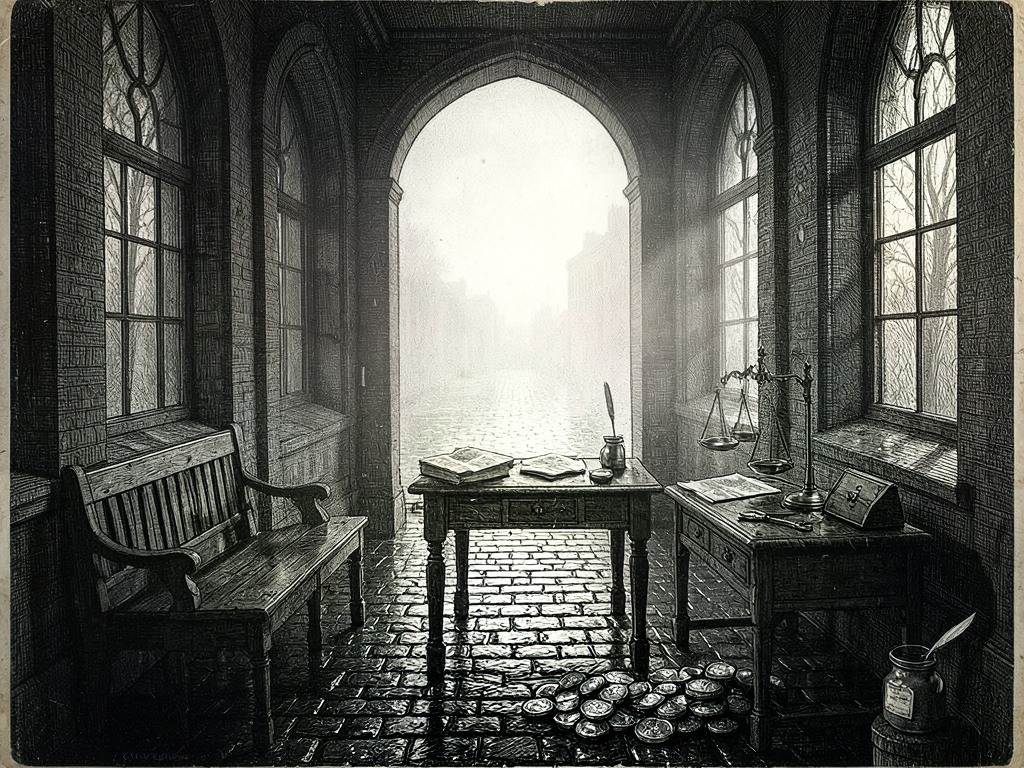
From the Exchange Arcade of the Upper Ward, the gazettes of this fourteenth day of November, eighteen hundred and forty-one, arrive as a bundle of inked intelligence, each folio a window into the commercial soul of the Empire. In Vienna, the official chancery edicts speak of a new assay standard for silver, a matter of no small consequence to those of us who keep the thaler close and the scales honest. The bourse at Pest reports copper steady at forty-two kreuzers the pound, a figure that has held firm against the autumn rains, though the timber trade from the Carpathian passes grows thin as the snows descend upon the high forests. One reads of grain shipments delayed at the Danube quays, the barges waiting for the waters to settle, and the millers of the Banat casting anxious glances at their storehouses.
In the crownlands, the provincial bulletins tell a quieter tale: the flax harvest of Bohemia has been gathered without pestilence, and the wool fairs of Moravia report a modest demand from the clothiers of Brünn. Yet beneath these calm reports runs a current of caution. The paper currency of the realm circulates with a certain reluctance, and the money-changers of the Graben are said to weigh each note with the suspicion of a man testing a bridge before crossing. The silver thaler, by contrast, remains the anchor of all reckoning, and I confess that in the silence of my office, I have found myself polishing a handful of them until they shone like mirrors, as if their lustre might ward off the uncertainties that gather like fog over the exchange.
From the official chancery comes word of a revised tariff upon imported copper wares, a measure designed to shield the mines of Upper Hungary from foreign competition. The gazettes of Pest and Vienna alike print the schedule in full, and the merchants of the arcade have spent the afternoon in close debate over its implications. The timber merchants, for their part, look to the forests with a wary eye, for the season of felling approaches and the roads are said to be soft. Thus the day closes with ledgers balanced, the scales wiped clean, and the lamps lit against the early dark. The Empire's commerce moves as it always has: by inches, by caution, and by the slow, deliberate weight of silver in the hand.