Imperial Decrees and Danubian Currents: The Vienna Gazettes of November
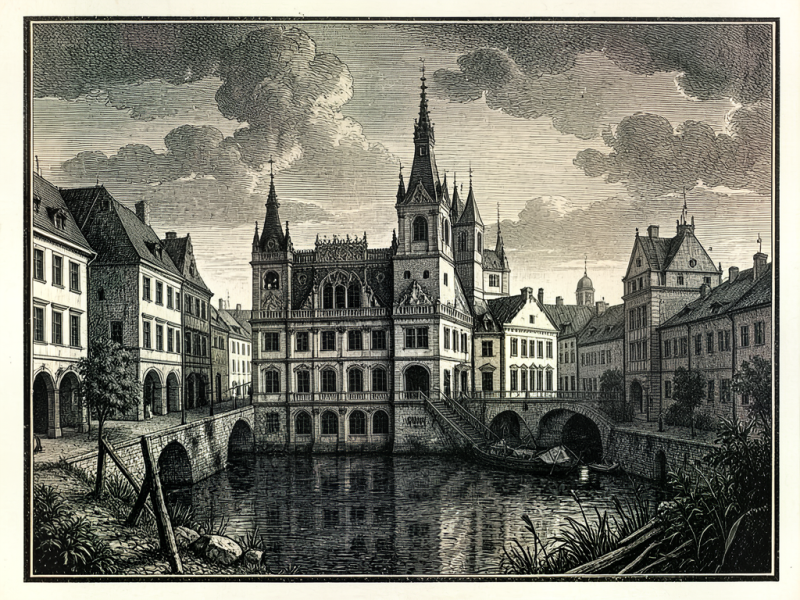
From the Imperial Chancery in Vienna, the latest official gazettes have reached our desk, bearing the weighty seal of the Habsburg crown. The Wiener Zeitung of the ninth of November, in the year of our Lord 1841, publishes a series of decrees touching upon the administration of the Crownlands, the regulation of river packet movements, and the adjustment of commercial tariffs. These are not mere bureaucratic notices; they are the sinews of empire, binding the distant provinces to the throne through the arteries of trade and law.
The Danube, that great highway of nations, witnesses a ceaseless procession of packet boats, their paddle-wheels churning the grey waters as they bear cargo and correspondence between Vienna and the eastern frontiers. The gazette records the arrivals and departures with meticulous precision, a testament to the punctuality demanded by commerce. Yet, beneath the surface of this orderly traffic, the archivist discerns the subtle tremors of a changing world: tariffs adjusted to favour certain goods, decrees that hint at the shifting alliances of the crownlands, and the ever-present shadow of the chancery's seal upon every transaction.
Of particular interest to this chronicler is the reassertion of ancient privileges and the confirmation of treaties long buried in the archives of the Hofburg. The imperial chancery, in its wisdom, has seen fit to reaffirm certain rights of the Boyar nobility in the borderlands, a gesture that echoes the forgotten compacts of centuries past. Such decrees, though couched in the dry language of officialdom, are the very stuff of history, weaving together the threads of feudal obligation and modern administration. The archivist must note, however, that the original charters, upon which these rights are purportedly based, remain shrouded in the mists of time—a matter that warrants further scrutiny.
Thus, the gazettes of Vienna serve as both record and instrument of imperial will. They chronicle the pulse of the Danube, the ebb and flow of commerce, and the immutable authority of the crown. Yet, for those who read between the lines, they also whisper of forgotten chronicles, of parchments that crumble to dust in forgotten crypts, and of the secrets that lie beneath the surface of official history. The Transylvania Gazette shall continue to monitor these imperial pronouncements, ever vigilant for the truths that lie hidden in the archives.