THE IMPERIAL LEDGER: A CHRONICLE OF COMMERCE AND CONSCIENCE
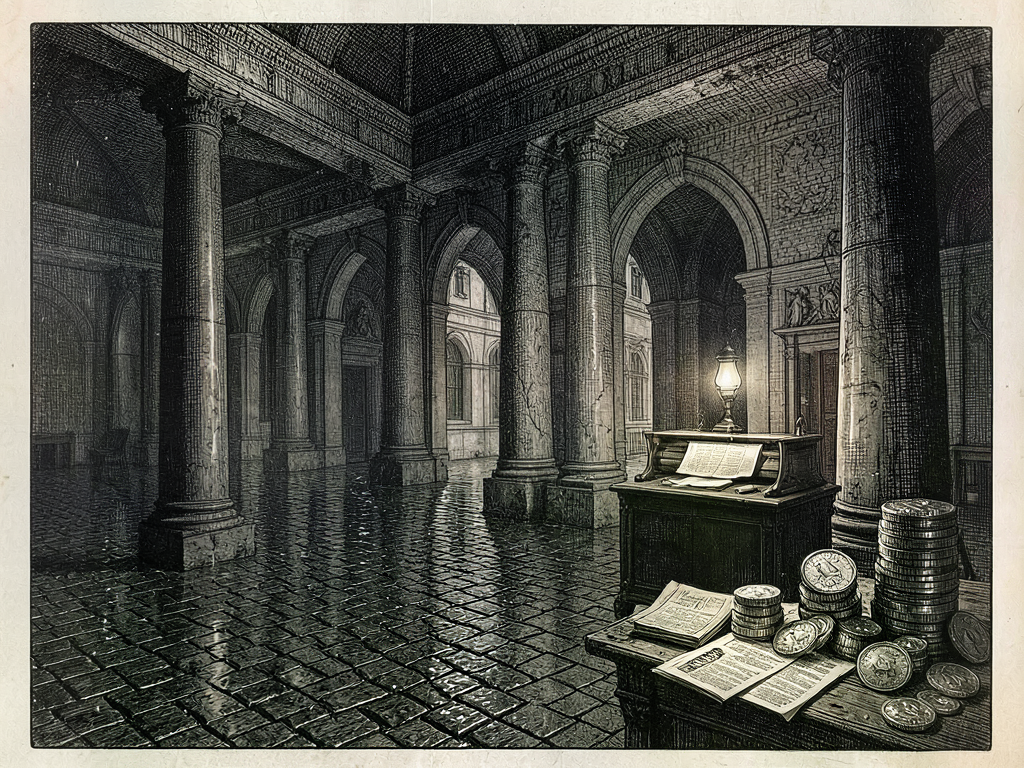
On this sixth day of November, in the Year of Our Lord 1841, the gazettes of the Austrian Empire arrive upon our desk like so many leaves of fate. From Vienna, the official chancery edicts proclaim a continued stability in the silver coinage, yet the trade bulletins from Pest whisper of a restless copper market. The price of the red metal has fluctuated by no less than three kreuzers per quintal since the Feast of All Saints, a tremor that has set the merchants of the Lower Ward to murmuring behind their ledgers. I confess, the polishing of my silver thalers has become a nightly ritual, their cold, smooth faces a bulwark against the dread that childhood poverty once instilled.
The timber trade from the Carpathian slopes proceeds with the usual autumnal vigour, though the grain reports from the Banat suggest a harvest less abundant than the last. The official returns, printed in the Imperial Gazette, show a decline of some four per cent in wheat shipments to Vienna, a figure that will not go unnoticed by the bakers of the Leopoldstadt. Meanwhile, the commercial bulletins from Pest announce the arrival of a new steam-mill on the Danube, a marvel of iron and fire that promises to grind flour with unprecedented speed. Such is the age: the old ways of stone and water give way to the hiss of steam, and the honest thaler must be weighed against the paper promises of speculators.
In the Crownlands, the provincial gazettes report a steady demand for salt and iron, while the chancery has issued a decree regulating the tolls on the great roads. The auditor notes, with a stoic satisfaction, that the exchange arcade remains the true heart of the realm, where every fluctuation is felt as a pulse. The silver thalers in my pocket are cool and reassuring; I shall polish them once more before the morrow's ledger is opened.