The Newport Rising: Echoes of Insurrection in the Monmouthshire Hills
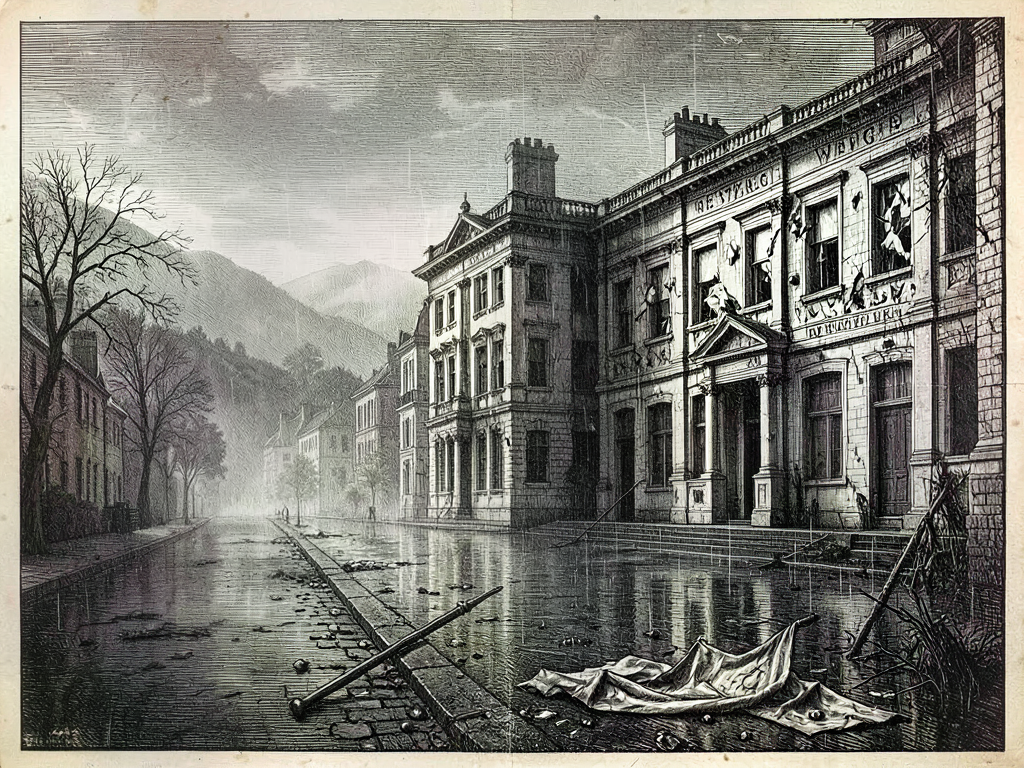
From the safety of our Scarlet Pass Crossroads, the correspondent reflects upon the tumultuous events of November 1839, when the town of Newport, in Monmouthshire, became the stage for the last armed rebellion against authority in mainland Britain. It was a night of cold rain and colder resolve, as thousands of Chartists, marshalled by the fiery John Frost, marched upon the Westgate Hotel, their hearts set upon the release of political prisoners and the redress of grievances long ignored by Westminster. The clash that ensued, a brief but bloody affray, left some twenty souls dead and many more wounded, their blood mingling with the mud of the inn yard.
Though the rising was swiftly crushed and its leaders transported to the distant shores of Van Diemen's Land, its spectre lingers. The inns along the coaching routes still buzz with whispers of the affair, and the traveller bound for the Welsh border would do well to note the sullen silence of the mining villages, where discontent festers like a wound. The authorities, ever vigilant, have strengthened the garrisons, and the mail coaches now travel with armed outriders through the more restless districts. Yet, the spirit of reform, once kindled, is not easily extinguished.
For the wayfarer, the lesson is clear: the roads of this island are not merely paths through field and forest, but veins through which the lifeblood of the nation flows. In these times, one must be as prudent as a diplomat and as watchful as a sentinel. The Newport Rising, though a failure, has sown seeds that may yet germinate in the fertile soil of public grievance. As we traverse the perilous passes of our own Carpathian borderlands, let us remember that the struggle for liberty is a universal one, and that the echoes of Newport reach even to our remote crossroads.