IMPERIAL DECREES AND DANUBE COMMERCE: A Chronicle of the Vienna Gazettes
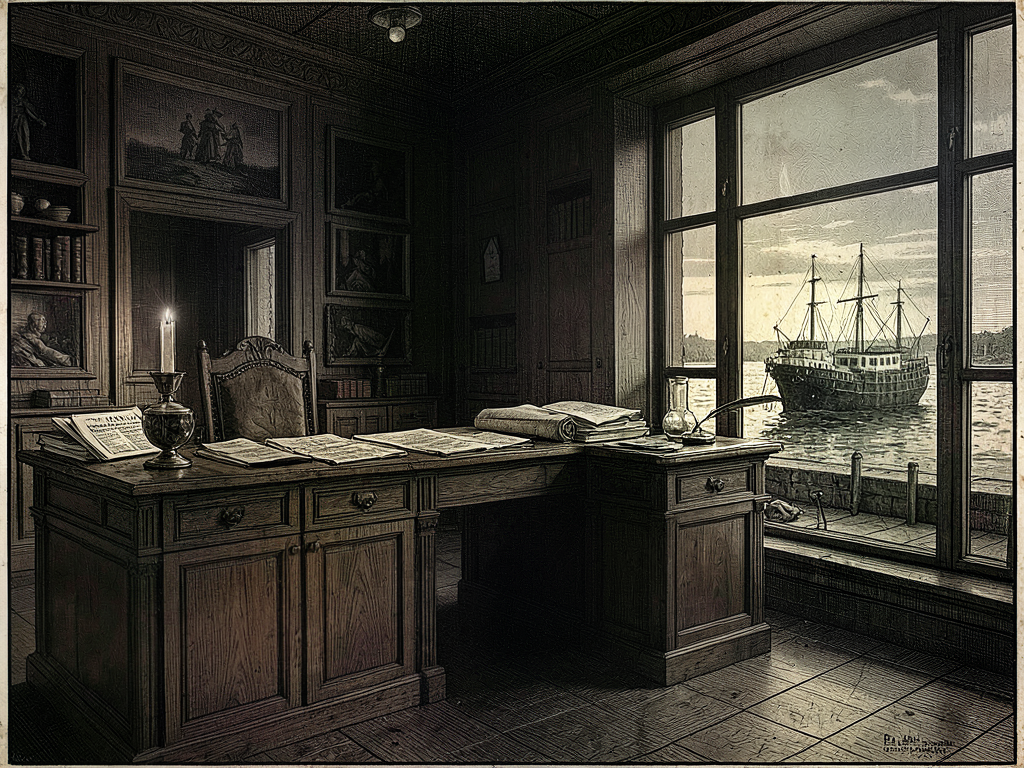
VIENNA.—The Wiener Zeitung of the fourth instant, reaching our scriptorium by the evening packet, affords a sobering reminder of the vast and intricate machinery of the Habsburg Crownlands. Within its closely printed columns, the Imperial Chancery sets forth a series of decrees touching upon the commercial tariffs of the Danube trade—a matter of no small consequence to the merchants of our own Carpathian borderlands, whose fortunes are ever entwined with the river's ceaseless flow. The gazette further records the movements of the river packets, those steam-driven vessels that now ply the waters from Vienna to the Black Sea, bearing cargoes of grain, salt, and timber. Such intelligence, though dry in its official phrasing, is the lifeblood of our commercial intercourse, and we commend it to the attention of all who would understand the pulse of Empire.
Yet, amidst these mundane reports, the antiquarian's eye discerns a deeper current. The same gazette, in its official chronicle, alludes to the confirmation of ancient privileges granted to certain Danubian towns—privileges whose origins are shrouded in the mists of centuries. We are reminded, with no small measure of unease, of the fragile parchments in our own Cathedral Crypt, where the founding charter of the Citadel lies—a document whose authenticity we have lately had cause to question. The imperial decrees, with their precise language and seals, stand in stark contrast to the dubious calligraphy of that older, darker instrument. The Empire builds its edifice upon the bedrock of law and record; but what when the bedrock itself is found to be hollow?
Let it be known, therefore, that the Chief Archivist of this Gazette has long maintained that the true history of these lands is not written in the bold proclamations of Vienna, but in the crumbling folios and forgotten treaties that moulder in the vaults of provincial castles. The Danube carries the commerce of today; but beneath its waters lie the silted remains of yesterday's oaths and betrayals. We urge our readers to regard the official gazettes not merely as a record of tariffs and packet schedules, but as a mirror reflecting the relentless passage of time—and the urgent need to preserve those chronicles that yet remain, before they, too, are swept away by the river's indifferent tide.
In conclusion, we note with satisfaction the imperial ratification of the Danubian tariff schedule, which shall bring a measure of predictability to our merchants. Yet we cannot suppress a shudder at the thought of those older, shadowed documents—the Boyar treaties and fortress histories—that lie unread and unloved in their crypts, their secrets known only to the dust and the worms. Let the Vienna gazettes chronicle the Empire's present; it is for we antiquarians to guard its past, however forged or fragile it may prove.