Imperial Decrees and Danubian Currents: A Chronicle of the Vienna Gazettes
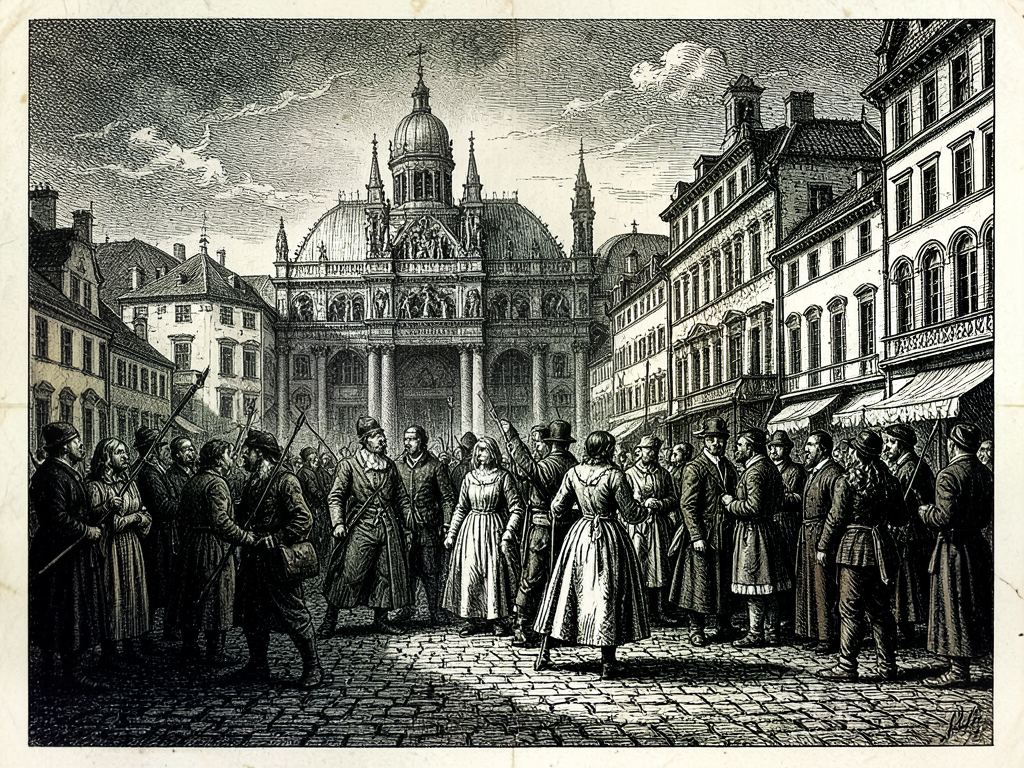
The Wiener Zeitung of the twenty-seventh of October, in the year of Our Lord one thousand eight hundred and forty-one, has reached our scriptorium by the morning packet, its pages still redolent of printer's ink and the damp of the Danube. Herein are recorded the decrees of the Imperial Chancery, sealed with the double-headed eagle, concerning tariffs upon the salt of Wieliczka and the transit of Galician timber; the movements of the river packets, their schedules precise as the ticking of a cathedral clock; and the commercial ordinances of the Crownlands, which bind the merchant and the peasant alike in the silken cords of fiscal obligation. Such is the official visage of Empire—ordered, legible, and relentless.
Yet, as I perused these columns by the guttering candle, my mind could not but wander to the crypts beneath this very cathedral, where lie the forgotten chronicles of an older jurisdiction. The gazettes speak of tariffs and tolls, but they are silent upon the great Boyar treaties of the fourteenth century, those parchment bonds that once defined the very borders of Transylvania. I have in my possession—dare I commit it to ink?—a fragment of such a treaty, its wax seal cracked, its Latin script faded, which suggests that the founding charter of our Citadel is not what the Imperial archivists would have us believe. A forgery, gentlemen, wrought by hands long turned to dust, and yet its shadow lengthens across the centuries.
The commercial reports from Vienna, therefore, strike me as a curious echo of a more ancient commerce: the exchange of loyalties and lands, of privileges and protections, that once flowed along the Danube like the river's own silt. The packets move with the precision of a well-ordered state, but beneath the surface, the currents of history are murky and treacherous. I shall continue my researches in the crypt, where the damp air preserves what the light of day would destroy, and where the truth, like a buried river, may yet be heard to murmur beneath the official silence.