Foundation Stone of the Great Pest Suspension Bridge Laid Across the Danube
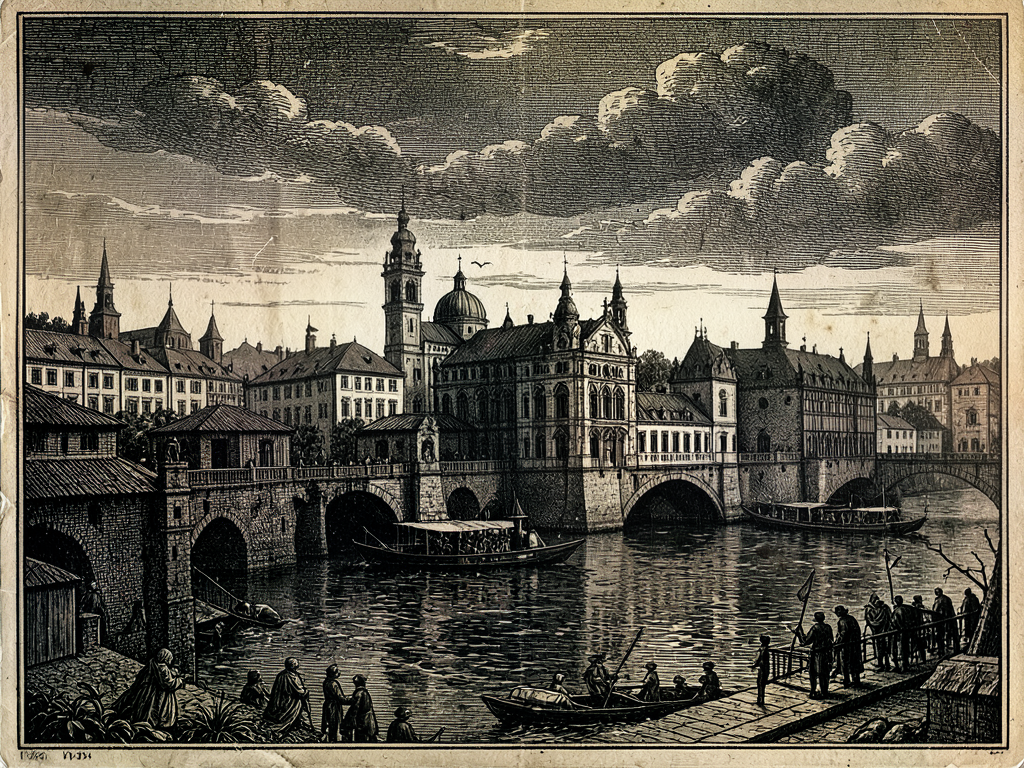
On the fifteenth day of October, in the year of our Lord 1841, the muddy banks of the Danube bore witness to an undertaking of singular audacity. Count István Széchenyi, that tireless advocate of Hungarian improvement, together with the celebrated English engineer William Tierney Clark, presided over the lowering of the first great caisson into the riverbed—a cylindrical chamber of iron and timber destined to anchor the piers of a suspension bridge that shall unite Buda and Pest as no ferry or pontoon ever could. The air was thick with the scent of wet earth and coal smoke, and the clang of hammers upon iron rang across the water like a tocsin of industry.
The commercial implications of this bridge are immense. For too long, the crossing of the Danube has been a precarious affair, subject to ice, flood, and the caprice of ferrymen. With a permanent chain bridge, goods from the copper mines of the Carpathians, the timber rafts of Transylvania, and the grain barges of the Banat may flow unimpeded to the markets of Pest and onward to Vienna. The tolls, to be levied by the Bridge Company, are expected to yield a steady return, and already shares are changing hands in the coffee-houses of both cities at a premium. Your correspondent observed Count Széchenyi, his coat bespattered with river mud, examining the caisson’s descent with the anxious eye of a man who has staked both fortune and reputation upon the venture.
Yet not all is rejoicing. The river has claimed its due; two labourers were nearly drowned when a cable parted, and the superstitious among the boatmen whisper that the Danube resents this bridling of its ancient course. Engineer Clark, however, remains unperturbed, declaring that the caissons will be sunk to bedrock and the chains suspended by the autumn of 1849. We shall see whether the Danube bends to the will of iron and coin, or whether it exacts a further price. For now, the foundation stone is laid, and the ledger of progress records another entry—though the final balance remains to be struck.