The Imperial Chancery Speaks: Decrees from Vienna and the Pulse of the Danube
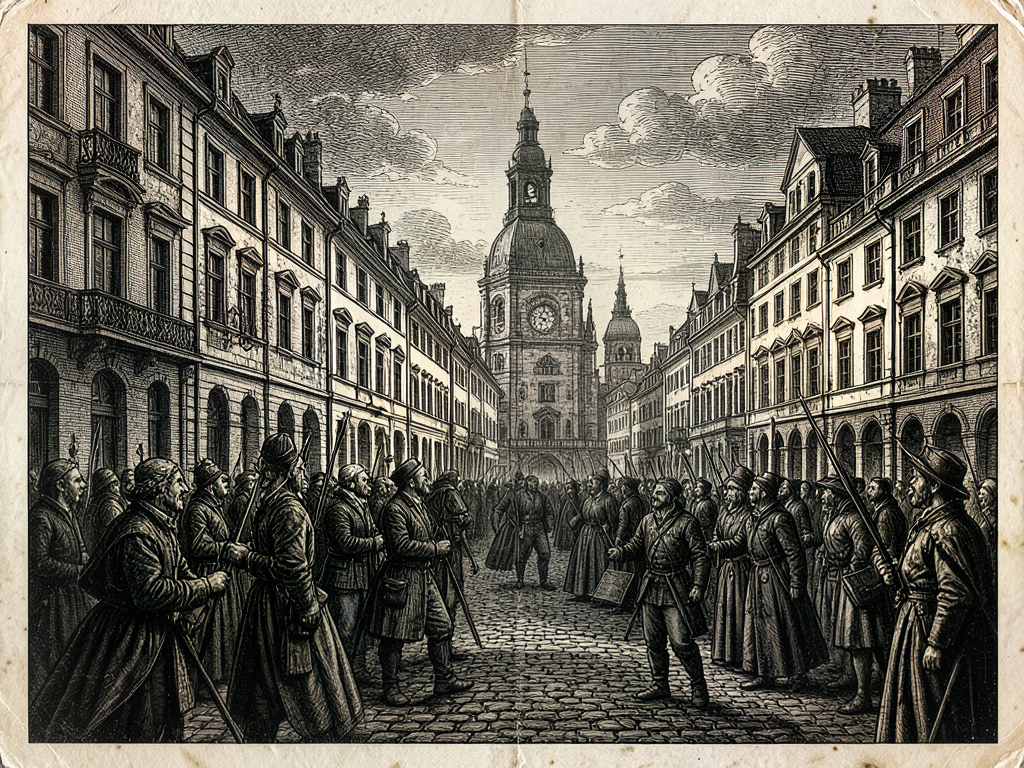
From the Imperial capital, the Wiener Zeitung of the 20th of September in this year of Our Lord 1841 has reached our scriptorium, its pages dense with the sober intelligence of the Habsburg chancery. We are informed, with that characteristic official reserve, of several decrees touching the commercial life of the Crownlands. A new schedule of tariffs upon salt and iron moving through the Danube ports has been promulgated, effective from the Feast of St. Michael. The gazette further records the arrival and departure of the river packets—the 'Ferdinand' and the 'Maria Anna'—their manifests a litany of grain, timber, and wool from the Banat and Transylvania. These are not mere notices; they are the very sinews of empire, and we, as humble chroniclers, must attend to them.
Of particular interest to this archivist is the appended report from the Danubian Navigation Commission, which notes a slight but persistent silting near the Iron Gates. The commissioners, in their wisdom, have authorised a survey, though no funds are yet assigned. Such practical matters, buried in the columns of a Viennese broadsheet, often presage the fortunes of our own borderland fortresses. For when the river's commerce is impeded, the garrison's pay is delayed, and the treaties with the Boyars grow brittle. The gazette, dry as it may seem, is a bellwether for the Carpathian marches.
Let it be recorded, then, that on this day the empire's administrative heart beats with a steady, bureaucratic rhythm. The decrees are sealed, the packets move, the tariffs are levied. Yet even as I transcribe these lines, my candle gutters over a far older parchment—a charter of the Citadel, its seals suspiciously pristine. The official gazette speaks of order and continuity; my own discoveries whisper of forgery and decay. Thus the archivist's task: to weigh the printed word against the crumbling truth, and to preserve both for the judgment of posterity.