The Imperial Ledger: A Chronicle of Prices and Edicts from Vienna to the Carpathians
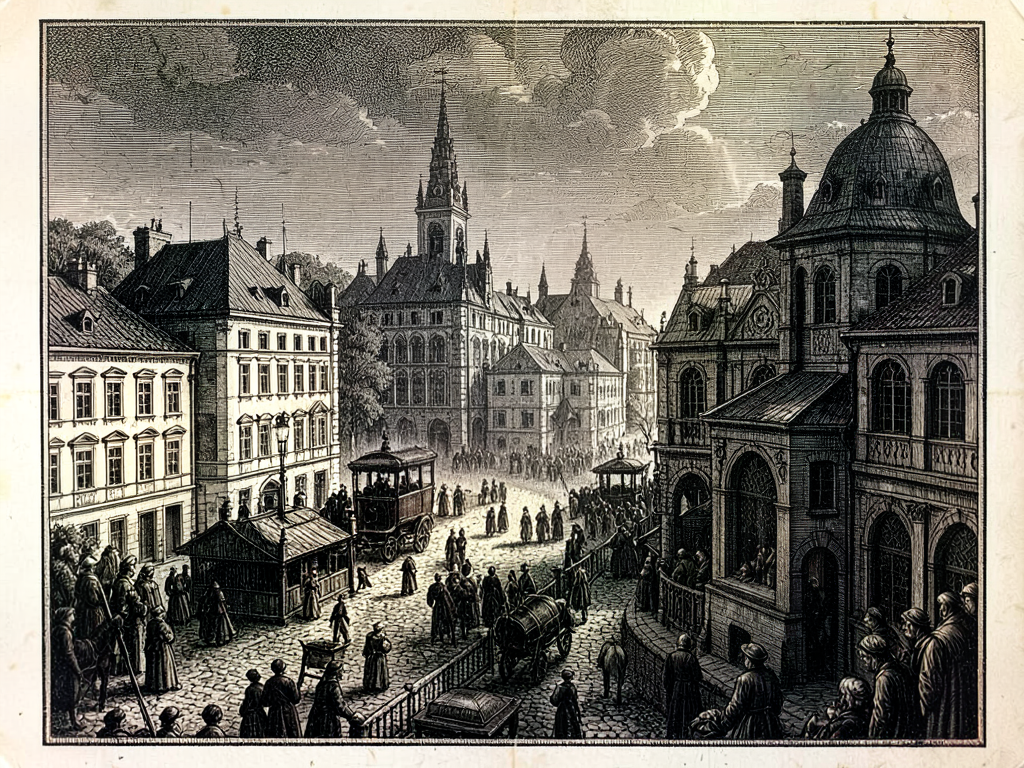
Vienna, 7th September 1841. The morning mists had scarce lifted from the Danube when the couriers of the Imperial Chancery began their rounds, bearing the latest gazettes and trade bulletins to the coffee houses and counting rooms of the capital. From the Hofburg's quiet corridors to the noisy arcades of Pest, the day's commercial chronicle reveals a steady, if cautious, pulse of trade. The price of Bohemian grain holds firm against the harvest, yet the spectre of an early frost has already sent a tremor through the futures of the eastern estates.
The official edicts published this day carry no small weight for the merchant class. A new tariff on the transit of timber through the Moravian gate has been decreed, threatening to raise the cost of building in the southern provinces. Meanwhile, the silver thalers from the mines of Kremnica continue to flow into the Vienna mint, their fineness confirmed by the assayers, to the relief of those who deal in long credit. The exchange rates against the Venetian lira and the Prussian thaler show a slight but noticeable shift, prompting cautious correspondence among the banking houses of the Rotenturmstrasse.
In Pest, the grain market presents a more animated scene. The arrival of several barges from the Banat has eased the local scarcity, yet the price of maize remains stubbornly high, a source of murmuring among the lesser folk who crowd the quayside. The official bulletins, however, offer little comfort, for the chancery's own reports on the Transylvanian harvest speak of blight in the Saxon villages—a matter that will surely be felt in the coming months. The commercial gazettes, diligently collated in the imperial libraries, thus serve not merely as records but as oracles for the prudent trader.
As evening descends upon the city, the gas lamps cast long shadows across the cobblestones, and the clerks of the Exchange Arcade close their ledgers with a sigh. For the auditor who must reconcile the day's figures, there is a quiet satisfaction in the orderly columns—though a recurring dread lingers, as if the very papers might whisper of unseen losses. Yet the chronicle of this day, faithfully preserved in the archives, will stand as a testament to the intricate dance of commerce and governance that binds Vienna to the farthest reaches of the Crownlands.