The Imperial Ledger and the River's Whisper: A Chronicle of Decrees and Tariffs from the Habsburg Chancery
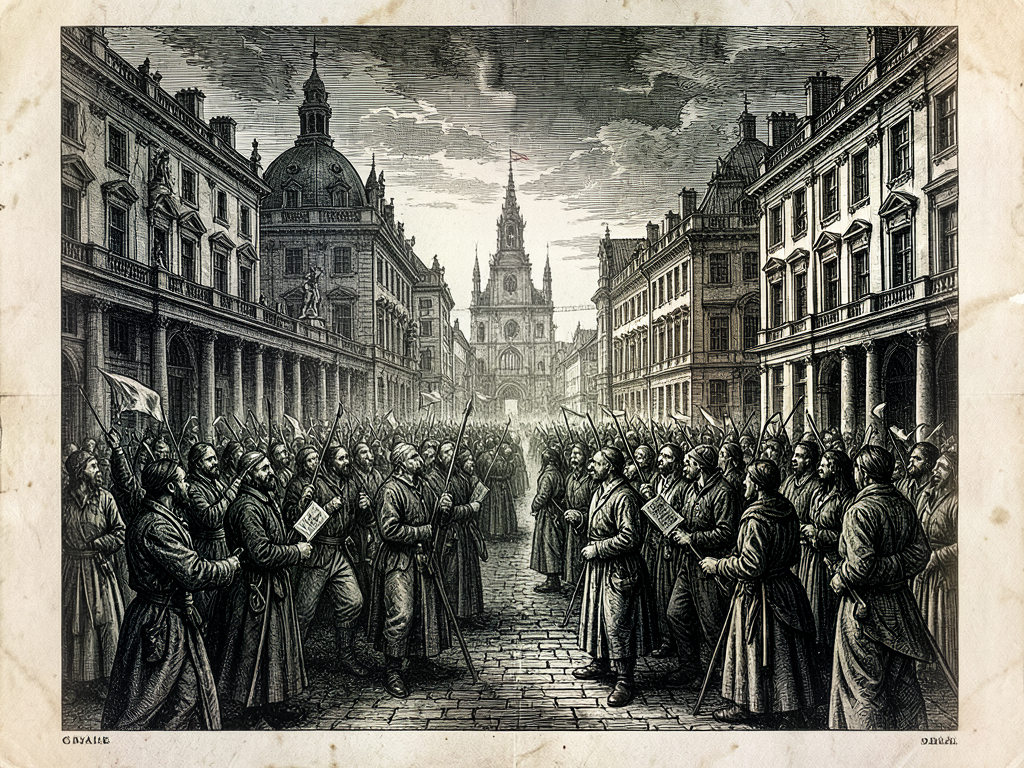
The latest sheets of the Imperial Court and Danube Commercial Gazettes, dated this very 6th of September, have at last been conveyed to our Carpathian redoubt, their pages still carrying the faint scent of Viennese print and the authoritative stamp of the Hofburg. Within these official folios, one discerns the slow, ponderous heartbeat of the Austrian Crownlands: a chancery decree adjusting the tolls upon Transylvanian salt, a commercial tariff recalibrating the levy on Ottoman tobacco, and the meticulous record of imperial appointments to distant border magistracies. To the uninitiated, these are but dry entries of bureaucracy; to the student of history, they are the very sinews that bind our polyglot empire, the quiet machinery deciding the fate of villages nestled in valleys we have never seen.
Yet it is the second section of the gazette, the Danubian river intelligence, that stirs the imagination with a more visceral power. The lists note the arrival and departure of the packet steamers Maria Anna and the Ferdinand I at the great river wharves of Vienna, their holds laden with Bohemian glass, Hungarian wheat, and bales of Wallachian wool. We read of the steamer Arpad, delayed by contrary winds near the Iron Gates, and the consequent anxieties of merchants awaiting their cargo of Transylvanian timber. These movements, so prosaically recorded, are in truth the lifeblood of commerce, the iron pulse of progress that now challenges the ancient, slow currents of our rivers. One cannot help but marvel at this modern miracle—the triumph of steam over the fickle Danube—whilst reflecting that our own mountain passes remain stubbornly wedded to the ox-cart.
Our correspondent in Vienna, a man of sober disposition, remarks that the most significant decree concerns the consolidation of the salt monopoly, a measure that will undoubtedly be felt in the Maramureș mines and the markets of Hermannstadt. He notes a palpable, if restrained, optimism in the coffee houses near the Graben, where merchants speak of expanded trade with the Principalities, tempered by a lingering anxiety regarding the Ottoman Porte's intentions in the lower Danube. The gazettes, he writes, are read with a gravity that borders on the religious, for in this age of revolution and unrest, the printed word from the capital is both a comfort and a portent.
For our part, we shall preserve these folios in the crypt archives, their ink a testament to the age. For in the steady accumulation of such seemingly mundane records—tariffs, decrees, and steamboat schedules—lies the true chronicle of our times, a history written not in the blood of battles, but in the patient hand of the imperial scribe and the relentless churn of the river paddle-wheel.