The Dragon and the Lion: England Declares War Upon the Celestial Empire
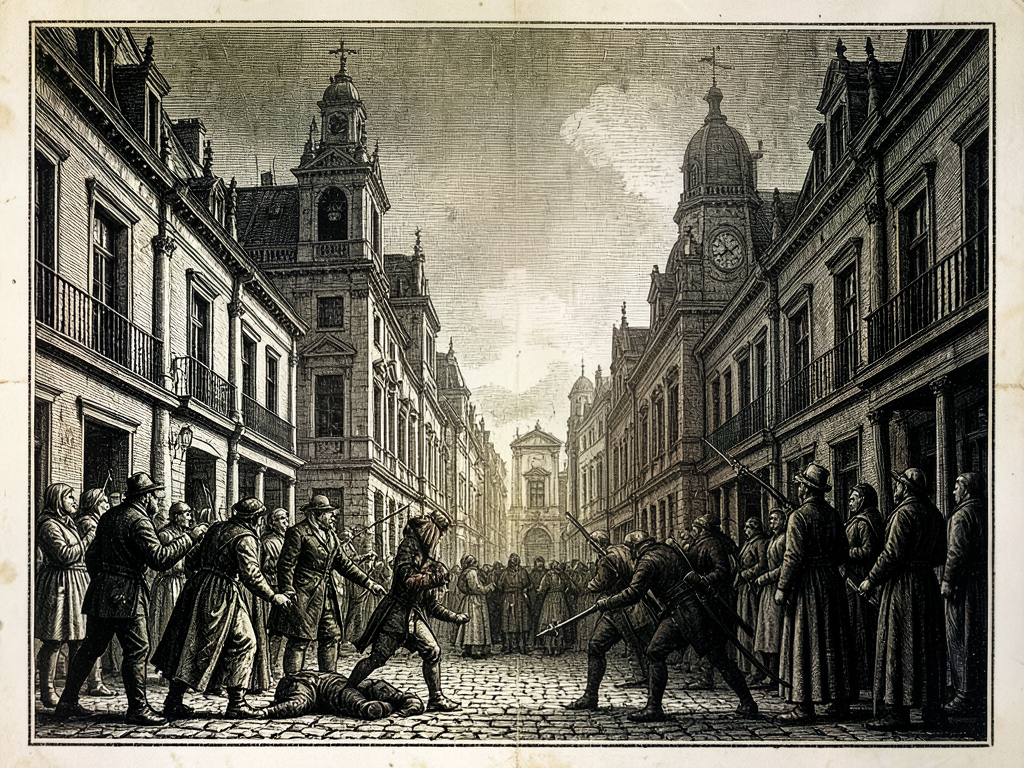
LONDON, via Continental Despatch — The tidings, borne by swift packet and overland courier, have at length reached our Carpathian fastness, carrying with them the thunderclap of a war that shall echo round the globe. It is now beyond dispute that Her Britannic Majesty's Government has formally declared hostilities against the vast and ancient Empire of the Qing. The casus belli, as reported in the journals of the capital, rests upon the stubborn refusal of the Celestial Court to open its ports to the free trade of Indian opium, a commerce which the merchants of London and Calcutta hold as vital as the very air they breathe.
From the smoky committee rooms of Westminster to the counting-houses of Leadenhall Street, the mood is one of grim resolve, tempered by a nervous apprehension of the unknown. The foe is not some petty European principality, but a power whose population numbers in the hundreds of millions, whose war-junks swarm like locusts, and whose forts guard the approaches to Canton with ancient cannon. Yet our correspondents note a certain swagger amongst the naval men, who place their faith in the new steam-driven vessels and the long guns of the line-of-battle ships. They speak of forcing the Bogue forts and sailing up the Pearl River as though it were but a jaunt upon the Thames.
For the traveller, and for the merchant whose ventures span the oceans, this conflict opens a new and perilous chapter. The sea-lanes to the East, already fraught with typhoon and pirate, now bristle with the threat of contraband seizures and acts of war. The overland routes through the Levant and Persia, already beset by brigandage and the whims of petty potentates, may yet see a diversion of trade, as the great East India Company seeks to safeguard its cargos. I have spoken with factors and ship's captains in the coffee houses of Trieste and Vienna; all agree that the price of tea, of silk, and of porcelain shall climb as steeply as the passes of the Himalayas, and that the prudent man will lay in stores against the coming dearth.
Yet it is the moral dimension that gives one pause in the quiet of the night. To wage war for the right to peddle a pernicious drug, to shatter the peace of a distant realm for the sake of a balance sheet — these are thoughts that cling to the mind like the mountain mist. But such reflections are for the philosopher, not the journalist. My task is to record the movements of men and the clash of empires, and to warn the unwary traveller that the road to Cathay now runs through the cannon's mouth. I shall keep a weather eye on the dispatches, and report as the storm unfolds.